Showing posts with label South Africa. Show all posts

Thursday, November 14, 2013

Highlights of Bonham's African Art Auction, 14 November

A few hours ago in New York, Bonham's Auction House held a sale of African and Oceanic Art. As usual, I wasn't in attendance, much less buying anything, but as a small-time collector of African Art, here's a few of the highlight lots, some of which were unsold: 

 There were a large number of headrests in the show. 
Above, Lot 82: A rare Twa pygmy Headrest from Rwanda or Burundi, sold for $5000.
 Lot 106: A Kuba Headrest from the DR Congo, sold for $1250.
 Lot 119: One of three beautiful Zulu headrests, this gorgeous tripod went unsold (guide price $1500)

 Lot 120: Two of three Zulu Headrests, this horse-like item went for $1375.

 Lot 126: Another three-legged Zulu headrest, this one went unsold (guide price $1500).

 Lot 149: [The crying of lot 149!] A gorgeous Bobo bull elephant mask from Burkina Faso, 
sold for $4000.

 Lot 162: The only piece in the sale with a Liberian provenance, this rare Grebo door once was owned by Yale and later by the Brooklyn Museum. Amazingly, it sent unsold (guide price $8000). 

 Lot 182: An incredible Ijo Mask from Nigeria, sold for $8125.

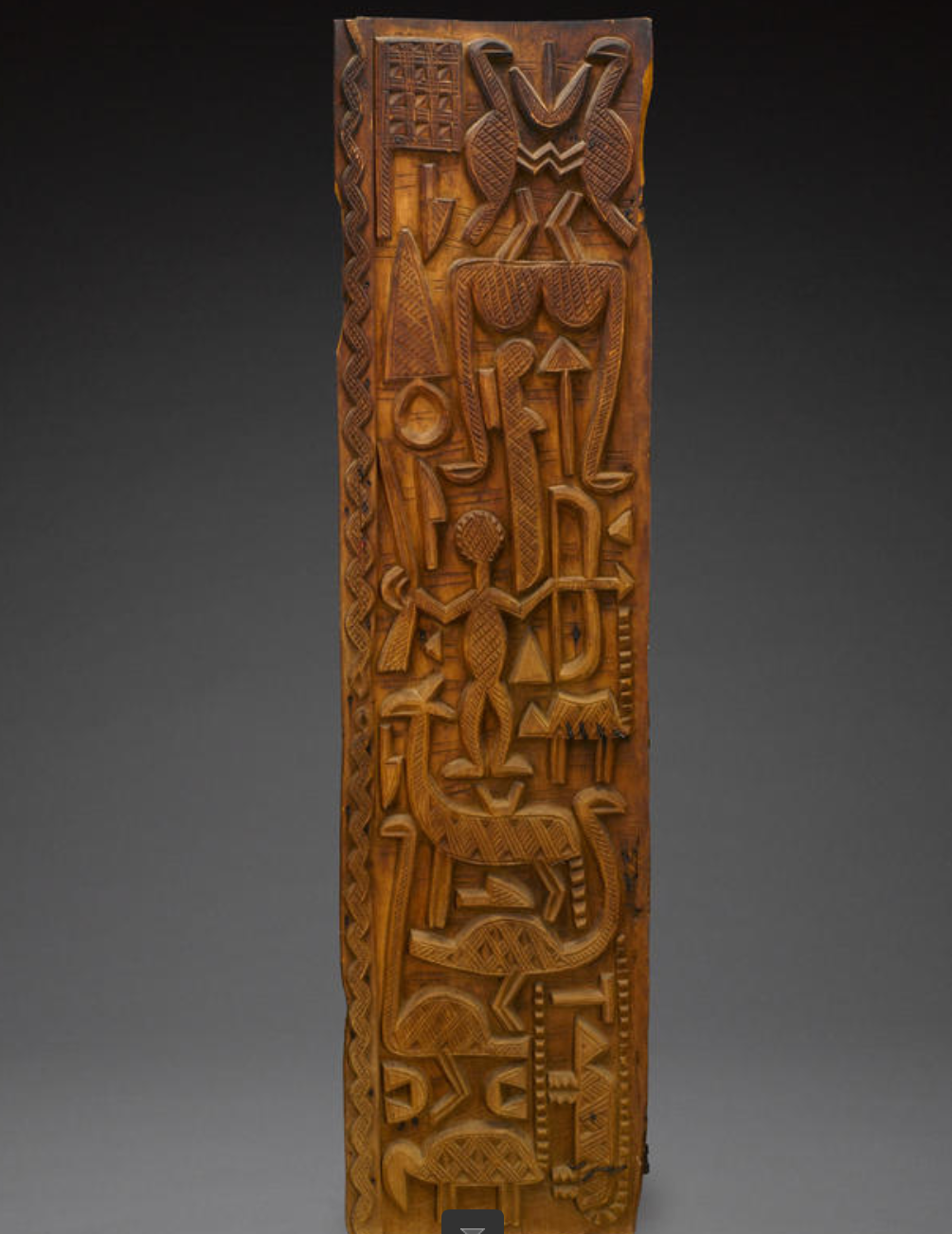
 Lot 187: An intricate Nupe Door from Nigeria, 
possibly attributable to the carver Sakiwa the Younger, sold for $3125.

  Lot 188: A gorgeous Mumuye figure from Nigeria, sold for $4375.
(profile view below)


 Lot 189 A Mambila ancestral figure from Cameroon or Nigeria, sold for $6250.

 Lot 210: A charismatic Pende Giwoyo Mask, from the DR Congo, with its comically solemn expression and grandfatherly beard, unsold (guide price $2500)

 Lot 215: A disk-shaped Mask, used in the Kidumu Society of the Tsai group 
of Teke people from the DR Congo

 Lot 218: A classic; the dynamically-featured Songye Mask, this item was photographed in 1972 in the Congo whence it was sourced(below). Sold for $3500.


Sunday, September 1, 2013

Global Entrepreneurship, Sub-Saharan Entrepreneurs


First, when the overall environment for business is bad, there are many entrepreneurs.  For example, while there is a great deal of variation shown by the data within Africa, it is also clear that this is a difficult place to do business, because, for example, regulation is unpredictable and property rights can be hard to defend against powerful people.
Lack of human capital is also a weakness.  You need capable engineers, managers and many others to help companies grow.  The education system in many African countries is not in good shape.
Yet, there are plenty of potential entrepreneurs in the study: “Sub-Saharan Africa reported the highest intentions of any geographic region (53 percent), which is consistent with their positive perceptions about opportunities and their belief in their capabilities” (Table 2.2).
The explanation is simple.  In such economies, entrepreneurship is a fallback option, when it is not possible to get a decent job in larger business.
The full report is here, wherein the reader will note that, while the GEM Report astonishingly surveyed nearly 200,000 people in 69 countries, representing 87% of the world's GDPs and 74% of its population, only 10 Sub-Saharan African states were included: Nigeria, South Africa, Angola, Botswana, Ghana, Malawi, Mozambique, Zambia, Uganda, Ethiopia, and Namibia. Of these, only Malawi is anywhere close to the developmental stature of present-day Liberia.  

Thursday, May 24, 2012

Highlights of the African Art Auction at Sotheby's, 11 May 2012 (2 of 2 Posts)

The second of two posts highlighting some of the gorgeous rare African art for sale on 11 May at Sotheby's in New York, including some masterpieces of several cultural groups, including a Dan container (Lot 113) and a Senufo Bird (Lot 196) from Cote D'Ivoire and a Mumuye figure (Lot 122) from Nigeria (see this 2011 post for other, similar examples of Mumuye art), as well as incredible pieces from Gabon (Lots 129 & 132) and stately Bamana (Lot 193) and Dogon (Lot 126) pieces from Mali.

Also below are some beautiful gems from less-commonly seen art traditions, including the grasslands of Cameroon (Lot 121), an amazing Zulu head-rest (Lot 178), and an elephant ivory scepter from DR Congo (Lot 194)--all three mesmerizing as abstract forms as much as fine cultural craft objects. 

The full online catalog of this auction is available at Sotheby's website. As can be seen below, several of these amazing works did not sell at all, while a few others blew pasts their estimates. 


LOT 113 DAN RITUAL CONTAINER IN SHAPE OF A RAM, IVORY COAST
ESTIMATE US$40,000-60,000 USD Lot Sold: US$68,500


CATALOGUE NOTE
Amongst the rarest objects produced by Dan artists are containers in the shape of a ram. Apart from the offered lot, only one other example is recorded in the Ethnografische Verzamelingen of Ghent University in Belgium (Yale Van Rijn archive inv. no. "0123784").
Little is known about the function of these containers. Both containers have a worn surface on top. For the Ghent example the hypothesis has been suggested that it might have served as stool or neckrest. In general, both works seem too large for neckrests. While their sizes and general shape would not be uncommon for stools (cf. one previously in the Renee and Chaim Gross Foundation, Sotheby's New York, May 15, 2009, lot 42), they seem too refined for an object of daily use. Instead, it is conceivable to locate their function in a ritual context. This hypothesis is further supported by traces of palm oil on the offered lot's surface. 


LOT 116 BAULE GONG BEATER, IVORY COAST
ESTIMATE US$5,000-7,000


LOT 119 WE (NGERE) MASK, GERE SUBGROUP, IVORY COAST
ESTIMATE US$40,000-60,000 Lot Sold: US$59,375 


CATALOGUE NOTE
The present mask, illustrated alongside the essay on Dada and Surrealism on the occasion of William Rubin's 1984 monograph "Primitivism" in 20th Century Art: Affinities of the Tribal and the Modern, is a conceptual masterpiece of Guere art. In her recent study on We and Guere masks, Marie-Noël Verger-Fèvre (2005: 111) identifies it as either war (te'e gla) or wisdom (gla kla'a) mask. According to this study (loc. cit.: 107-108), the war mask "belongs to the category of great masks by virtue of its age and of its importance in the lineage to which it belongs. This mask once played a prominent role in We lineages because it intervened in matters of tribal warfare, which was widespread before the arrival of European colonials. [...] The great mask of wisdom, gla kla'a, appears in public on rare and solemn occasions. It is present at commemorative ceremonies and the funerary rites of important individuals and high Gla dignitaries. It also appears once every decade or so, apparently for the singular purpose of exhibiting it. Whenever it appears, the full procession of masks takes place before it." 


LOT 120 NUNUMA CROCODILE MASK, BURKINA FASO
ESTIMATE US$20,000-30,000 
  
LOT 121 CAMEROON GRASSLANDS BELLOWS, CAMEROON
PROPERTY FROM THE COLLECTION OF ERIC EDWARDS, NEW YORK
ESTIMATE US$7,000-10,000 Lot Sold: US$7,500


LOT 122 MUMUYE ANCESTOR FIGURE, NIGERIA
ESTIMATE US$40,000-60,000 Lot Sold: US$110,500 


CATALOGUE NOTE
Mumuye figures represent the human form with strikingly abstract elongated shapes, ingeniously playing upon positive and negative space with openwork subtraction from a columnar whole. Kerchache (1988: 546) notes: "[Mumuye] statuary does not depict ancestors but rather incarnates tutelary spirits. Yet, statues reinforce the status and prestige of their owner who, as he holds them in his hands, has a dialogue with them and thus ensures his personal protection."
For a closely related figure see Leuzinger (1985: pl. 72b).


LOT 128 YORUBA-OWO IVORY ORNAMENT, NIGERIA
Made of African Elephant (Loxodonta africana) ivory, with Coconut shell inlay.
ESTIMATE US$100,000-150,000 Lot Sold: US$254,500 


CATALOGUE NOTE
In his discussion of the offered lot on the occasion of the exhibition Africa, The Art of a Continent at the Guggenheim Museum in New York, Ekpo Eyo (in Phillips 1995: 138) noted: "Among the Owo-Yoruba, a red costume (orufaran) is worn by the highest ranking chiefs as a priviledge granted by the king (olowo). [...] It consists of a top shirt made of imported red flannel that is scalloped to resemble the scales of an anteater or pangolin. Like the scales of a pangolin, the costume protects its wearer from harm by rendering him invulnerable. Sewn onto the scalloped shirt are a series of carved ivory ornaments (omama) depicting powerful animals such as the ram, crocodile, leopard, or horse. [...] The ram omama shown here, one of a pair (the other is in the Metropolitan Museum of Art in New York [inv. no. "1991.17.123"]), probably came from the orufaran of the chief (ojomo) of Ijebu quarter, originally located on the outskirts of Owo town proper. [...] If he inherited the costume from the first ojomo, Oladipe, then it can be dated to the last quarter of the eighteenth century. The pair of omama were very likely made by the same carver."
Drewal (in Ross 1992, p. 199) continues: "Together with the elephant, the ram is the most important totem among the Yoruba. It is a sign of the preeminent power and aggressiveness of one who tolerates no rival." 


LOT 129 FANG ARMLET MASK, GABON
FROM THE COLLECTION OF CECILLE & MICHAEL PULITZER, SANTA BARBARA
ESTIMATE US$7,000-10,000     
LOT 132 MAHONGWE RELIQUARY FIGURE, GABON
ESTIMATE US$30,000-50,000 Lot Sold: 62,500

LOT 134 KWELE ANTELOPE MASK, REPUBLIC OF CONGO
ESTIMATE US$150,000-250,000


CATALOGUE NOTE
Museum, London (Trowell and Nevermann 1968: 70); a third in the Musée Dapper, Paris (collected by Aristide Courtois before 1938, Falgayrettes-Leveau 1995: 61); a fourth in the Kulturen Museum, Lund (inv. no. "51.467.113"); and a fifth in the Etnografiscka Museum, Gothenburg (Leuzinger 1970: 241, pl. Q 9).
Kwele antelope are exceedingly rare. Several related masks are recorded in important museum collections: one in the Musée Barbier-Mueller, Geneva (inv. no. "1019-49", Schmalenbach 1988: 210, cat. 127); a second in the in the British
Hahner-Herzog (1998: text to cat. 69) notes: "The rare masks of the Kwele, a little-investigated ethnic group of northeast Gabon and the adjacent area of the Republic of Congo, are associated with the Bwete association, which maintains social order. The masks are also used in initiation rites and at the end of periods of mourning. Representing benevolent forest spirits, they have zoomorphic or anthropomorphic traits, or a combination of the two. The faces are usually painted in white kaolin earth, a pigment associated by the Kwele with light and clarity, the two essential factors in the fight against evil."
Discussing the aforementioned Barbier-Mueller mask, she continues: "The rare Kwele masks with vertically projecting horns exhibit a range of stylistic differences. Some examples, such as the one illustrated here and those in Göteborg and London depict antelopes."


LOT 136 DOGON RITUAL OBJECT, MALI
MINIATURE SCULPTURE FROM THE COLLECTION OF MARTIN AND ROBERTA LERNER
ESTIMATE US$8,000-12,000

CATALOGUE NOTE    
This fine figural-architectural sculpture features a seated figure above a tall flat form, with geometric
openwork, resembling the hilt of a knife. Several related works are known: 
see one in the Seattle Art Museum (inv. no. "67.53"); and another offered at Sotheby's Paris, December 5, 2003, lot 112. All share in common small pieces of metal which preclude the presence of a blade where it would be expected, and indeed seem too thin and broad to be handles. These metal pieces were seemingly for the addition of an unknown attachment though none with any such attachment is known. Although the specific use of this enigmatic object remains a mystery, the layered patina attests to its function within sacred ceremonies, as the refined quality of the sculpture does to its ritual importance. 


LOT 175 NGOMBE STOOL, DEMOCRATIC REPUBLIC OF THE CONGO
ESTIMATE US$8,000-12,000 Lot Sold: US$8,125 
LOT 178 ZULU NECKREST, SOUTH AFRICA
ESTIMATE US$6,000-9,000


LOT 191 BEMBE JANUS HELMET MASK FOR THE ALUNGA SOCIETY, DEMOCRATIC REPUBLIC OF THE CONGO echawokaba/echwaboga. 
ESTIMATE US$40,000-60,000 Lot Sold: US$50,000


CATALOGUE NOTE
Discussing a related mask in the Musée Barbier-Mueller, Geneva, Hahner-Herzog (1998: text to cat. 96) notes: "This mask represents a type of mask which, according to the Bembe, goes back to the Bahonga, a hunting and gathering people whose collecting of honey is said to have been done under the tutelage of this mask. With the Bembe it is called ibulu lya alunga or echwaboga, represents a bush spirit (m'ma mwitu), and belongs to the accessories of the hierarchically ordered Alunga men's association. The mask is used during acceptance ceremonies for new, usually young members, as well as in hunting rites. For public appearances the carved helmet is decorated with an elaborate headdress of feathers and porcupine (ehala) quills, and a neck fringe of fibers. The dancer is clad in a multilayered fiber costume (asamba). These impressive Alunga masks are invariably conceived in the form of cylindrical helmets with two, as it were, Janus faces, whose black rhombic or cross-shaped eyes with protruding pupils are set in large oval hollows painted white. Due to these striking facial features the masks have been interpreted as representing owls, with which the masqueraders in fact occasionally identify. In addition, the two faces are intended to invoke the all-seeing nature of the mask spirit, a capacity which enables him to reconcile the opposing forces of nature, such as male/female or day/night." 


LOT 193 BAMANA OR MANINKA HELMET MASK, MALI
PROPERTY FROM THE COLLECTION OF ZAFRIRA AND ITZHAK SHOHER, TEL AVIV
ESTIMATE US$25,000-35,000 Lot Sold: US$26,875 


CATALOGUE NOTE
(1995: 60). Another closely related mask, also previously owned by the Carlebachs, is in the Menil Collection in Houston (inv. no. "X 0039"). Describing that example, Malé (in Van Dyke 2008: 62) notes: "In the context of initiation, its role is evoked by the phrase ba kara misi; according to Youssouf Tata Cissé, quoted in Tal Tamari (2001: 101- 102), 'this designation is composed of ba (mother, basis) and kara (perfect circle, creation spirit, divine spirit); one could translate this expression as foundational circles symbolizing the divine spirit [...]. Accordingly, the various elements of the misikun mask seek this formal perfection."
For a closely related domed, horned, faceted helmet mask in the Musée Dapper, Paris, see Falgayrettes-Leveau 
He continues: "The misikun mask is attached to a wearable marionette in an ensemble worn by two performers. [...] When it appears on the scene, the misiba [cow] walks around the area with a serene, graceful gait, and then stops in the middle of the village. During this promenade the shepherd raises and lowers the stick like a rider encouraging his steed. When the marionette stops moving, the young women intone the popular song "Misiba", composed in honor of generous men. The misiba symbolizes generosity among the Bamana and Maninka. [...] The performance teaches the duty of protecting those who are generous. Whereas the mask represents simply a bovid, the marionette evokes a more specific contribution of ploughing cattle to the local agriculture production; through other songs, tribute is paid to their labor." 

LOT 194 LEGA IVORY SCEPTER, DEM. REPUBLIC OF THE CONGO
African Elephant (Loxodonta africana) ivory. 
PROPERTY FROM THE COLLECTION OF ZAFRIRA AND ITZHAK SHOHER, TEL AVIV
ESTIMATE US$6,000-9,000
   
LOT 196 SENUFO BIRD STATUE, IVORY COAST
PROPERTY FROM THE COLLECTION OF ZAFRIRA AND ITZHAK SHOHER, TEL AVIV
ESTIMATE US$70,000-100,000 Lot Sold: US$86,500 


CATALOGUE NOTE
Koulotiolo, creator of the world, a distant and inaccessible diety. On the other hand, the mother of the village, Katieleo, regenerates the world and redeems humankind through the initiation rites of the poro. [...] A male villager who has not been initiated will be excluded from the village and will lose his rights as a citizen."
According to Kerchache (1988: 512) for the Senufo, the poro association "[...] is the pillar of communal life. Responsible for the initiation and training of the young boys, it is aimed at shaping an accomplished, social man who is integrated into the collective; it aids his entry into public responsibilities. [...] The Senufo believe in a god, 
Garrard (in Phillips 1996: 457) notes: "In former times many of the men's secret Poro societies in the Senufo region owned a large standing sculpture of a bird. This statue, kept in the sacred forest, was used in the rites for the admission of initiates to the final phase of training. It generally had a hollowed base, which permitted it to be carried on the head of an initiate. Some examples also have holes in the wings, through which cords were passed to steady the bird when carried. [...] Older Senufo [...] usually name it as sejen or fijen [...] a term that simply means 'the bird'. The significance of this bird is indicated more clearly by two other names. It is sometimes called kasingele, 'the first ancestor', which may refer either to the mythological founder of the human race or to the ancestral founder of the sacred forest. Alternatively, it is named poropia nong, which means literally 'mother of the Poro child'. The statue is thus a primary symbol of the Poro leadership, indicating the authority of its elders."
The morphology of these rare statues references both male and female characteristics, with the swollen, pregnant belly, and the elongated phallic beak. A related figure is in the Metropolitan Museum of Art, New York (inv. no. "1978.412.382"). 
LOT 197 SALAMPASU MASK, DEMOCRATIC REPUBLIC OF THE CONGO
PROPERTY FROM THE COLLECTION OF ZAFRIRA AND ITZHAK SHOHER, TEL AVIV
ESTIMATE US$25,000-35,000

 LOT 198 LEGA FIGURE, DEMOCRATIC REPUBLIC OF THE CONGO
PROPERTY FROM THE COLLECTION OF ZAFRIRA AND ITZHAK SHOHER, TEL AVIV
ESTIMATE US$10,000-15,000 Lot Sold: US$25,000

Thursday, May 17, 2012

Paula Scher's Map of Africa


At the other end of cartographic history from the previous post's artifact sits this contemporary specimen from world-famous graphic designer Paula Scher of the Pentagram Group. In its own way nearly as abstract as the chart from 1570, with fanciful interpretations of the shapes of many of the countries, especially Cameroon, Benin, Mozambique and several others. 

The map's defining feature is overwhelming bustle of twisting place names that fan out across the entire canvas. Country names and capital cities are most prominent, but each space on land and ocean is filled with the chalky block type of cities and other features near to their true location. 

"Liberia" is in white and upside-down from the reader as the Guinea Coast turns northwesterly. "Monrovia" is nearly more prominent in black, delimited in a white box. Between the two sits the large, bending "Grain Coast" crammed in with a dozen other town names: Harbel, Mount Barclay, Buchanan, Edina, Hartford, Greenville, Marshall, Brewerville, Tubmanburg, Robertsport. Settler communities, all. Back on the land, names of a few county towns can barely be deciphered in tiny, thin letters-- only Zwedru is large enough to read from afar. 

Thursday, June 30, 2011

Mines and Undermining Minors who Mine Them

At the present time, Liberia's economic growth is in significant part due to the recommencement of iron ore and other natural resource export, with lots of excitement around the Chevron exploration announcement. President Sirleaf mentioned, in her talk at the CDG last week, the hurdles in avoiding resource curse, and spreading the benefits of these billion of dollars in investments to all of Liberia's citizens, which is an on-going struggle.

With that in mind, recently, several interesting episodes have been playing out in southern Africa, namely Zambia, Zimbabwe, and South Africa, which might be educational cautionary tales for Liberia and other economies which have just inked concession agreements and are commencing resource exports:

In Zimbabwe, the administration of Robert Mugabe is trying to both attract $6,000,000,000 in foreign investment in the sector over the next 5 years, while at the same time forcing foreign entities to surrender a majority stake in their operations to locals by the end of September. The contradictory nature of this agenda seems not apparent to the administration. Also, the roster of Zimbabwean businesses and investors in a position to acquire such shares may be a short list, and the scarcity of such buyers would effect the prices of these equity stakes in such a fire sale. (Thanks to Todd Moss of CDG for the link).

Speaking of the Mugabe administration acquiring mining assets and less than transparent circumstances, Zimbabwe was also approved to export diamonds under the Kimberely Process. These would be coming from operations that the military violently seized by force in 2008. The individual who seems to have had decision making power in this is Mathieu Yamba Lapfa Lambang, of the DR Congo, who is currently the Kimberely Chairman.

This dovetails well with other regional news on state-ownership of mines: In South Africa, there has been on-going talk of nationalizing mining companies, which some say would be merely a bailout and windfall for a clique of powerful, corrupt elites in and around the ruling ANC. So much so that prominent South African communists are against nationalization, which is the making of an Onion headline. Interesting how the South African saga is one chapter ahead of Zimbabwe's local-ownership decrees.

By the way, if you're unaware of South Africa's Aurora Mining saga, may I suggest the BBC African Perspectives Podcast as an introduction to the topic.

Elsewhere in southern Africa, there has also been an enormous deal of backlash in Zambia against extraction-extract entities, as this accounts for around 3/4 of Zambia's export earnings, but only about 10% of tax revenue.

Khadija Sharife wrote this eye-opening, jaw-dropping opinion piece on Al Jazeera last week concerning Zambia's predicament (thanks to zungzungu for the link). Its not the first time that someone's argued that the supposedly squeeky-clean, least-corrupt nations, such as lily-white Switzerland, are in fact the very center of global corruption.

What I hadn't heard before is Sharife's in-depth analysis supporting his position that the Extraction Industry Transparency Initiative-- of which Liberia was one of the first signatory countries-- disadvantages the less-developed partner government, and allows the foreign corporate investor nearly-limitless options for not only avoiding taxes both in the host country and elsewhere, but also to employ a range of amoral tricks of accounting for all types of bribery and corruption.

Each of these country's handling of its mining sector, its valuable assets and previous foreign investment, is critical not only to its own economic destiny, but beyond its borders. Nearly every sub-Saharan economy relies primarily on mining and extraction. Liberia, still in the nascent stages of economic stability, is balancing the promises of future prosperity in large part on mining--and how it addresses similar issues and concerns that of broadening the benefits to more Liberians.

Thursday, May 19, 2011

Just How Easy (or Hard) Is it To Get African Visas?

©2011 Matthew M. Jones/Moved2Monrovia. Click for larger version.

"Africa is Open For Business!"

Its hard to avoid hearing this slogan recently: verbatim on CNN, and in the pages of major publications. Global consultancies will tell you this, too. But what does this mean, in practical, personal terms? Sub-Saharan Africa is made up of more than 50 countries, almost every one of which at least states that they're trying to attract foreign investment.

There have been attempts to measure this. The World Bank's Ease of Doing Business rankings have exploded in popularity in recent years (with the Caucasian Republic of Georgia mentioning its top-reformer status in television advertising). This index, surprisingly, does not compare one of the most basic measures of ease and welcome, and one that reflects directly on a country's efforts to open its doors to potential investment: How simple and straightforward is the entry process for foreigners into these countries?

I've often thought about this before in the last four years of traveling across the continent. But two recent incidents reminded me of this. The first was the report from the Cato Institute, titled "Why Is Africa Poor?", which, among other bemoanings, wondered how many potential tourists and foreign investors have been put off by the hassle or perceived chore of getting a visa to visit an African country (speaking of the Republic of Georgia):

To increase its share of the tourism business, Africa will have to liberalize air flight and visa regimes. In the formerly communist country of Georgia, for example, it is not necessary to acquire a visa for visitors who come from countries with a GDP per capita of $10,000 or more. Compare the Georgian system to the difficulty of entering many African countries or, for that matter, the difficulty of leaving African countries like the Democratic Republic of Congo, where one has to run a gauntlet of security and other checks—informal and formal.

I wonder how many visitors from rich coun- tries to Africa have been put off by the challenge of just getting to the continent or getting a visa. Yet I suspect that few, if any, overstay their welcome. The number of tourists to Georgia has nearly quintupled from 2003 to 2009—a war with Russia notwithstanding.


I don't know what an "air flight regime" is, and am not endorsing this report wholeheartedly, but I agree with part of the above sentiment.

Separately, but similarly, last week's surprising headline incident, in which veteran diplomat John Campbell was unable to gain entry to Nigeria in time to attend a graduation ceremony of an American University backed by former vice president Abubakar. Just to underscore: among many other career acheivements, Campbell is the former Ambassador to Nigeria. So you'd think he might be familiar with getting into and out of country...which makes you wonder how he was unable to get his visa. Hmmm.....

With these in mind, I conducted a very unscientific investigation into the sometimes-murky world of obtaining an entry visa into Sub-Saharan countries. Before going further, please read and agree to this legally iron-clad disclaimer: I can't guarantee that what I've gathered is accurate, and this information is subject to completely change. I obtained 95% of this information from the State Department's website, which is a great source, as well as the websites of various foreign diplomatic missions in Washington and New York. This does not cover requirements other than those for US Passport holders, and will not go into scenarios like obtaining visas for neighboring countries in Africa can sometimes be easier, and sometimes more difficult.

As this is already a long post, I'm also not going to index any of the basic details of visa applications, like the different types of visa (based on purpose of visit and length of stay), or important steps like getting required vaccinations, or any discussion of fees. Again, this is a subjective survey, and this information could change as I write these words. In summary, do not fly to Africa without required entry visas. Doing so can result in being flown back home at your own expense, or being detained, fined, or imprisoned.

The ease or difficulty of US citizens entering the 50-plus Sub-Saharan countries covers a broad spectrum: some countries are as wide-open as Netherlands, some so unwelcoming as be almost North Korean.

Starting with the more hospitable category, the good news is that several of the more popular destinations for American visitors are among the easiest to get into, and in almost all cases don't require a visa. These are popular business, development, and tourist destinations like Botswana, Senegal, and Mauritius. Others are something of a pleasant surprise, with no pre-arrival visas required for Americans to enter Zimbabwe, Equatorial Guinea, or Swaziland. [Update 5/21: Rwanda grants most tourists a 90 entry visa-free, but seems to have different requirements for aid workers, students, or businessmen. Thanks to Jina Moore for this suggestion.]

Similarly, many states allow the vast majority of American visitors to just show up unannounced and gain entry, but there are a few details that might be relevant. For instance, South Africa is somewhat infamous for requiring at least one entirely blank passport page per entry, and anecdotes abound of customs officers insisting on even more virgin territory, supposedly in case a visitor transverses through other countries in the region and seeks another entry into SA. This in turns leads neighboring countries, like Namibia, to reportedly mimic this requirement. Rather than be booted back onto a 15-1/2 hour flight home to New York, a cost you would be responsible for, travelers should take note, and consider having extra pages added to a passport.

Likewise, some countries let Americans in without a problem, but getting a visa beforehand can still be strongly advisable. Kenya is a prime example: A pre-arranged visa can be a huge time saver, easing your life just when you are your most miserably jet-lagged. Rather than waiting in a long line and filling out paperwork in the groggy disorientation of arrival, sail past border control, and its queues. In 2008, I went ahead and got a Kenyan visa in Washington before I left the states, getting my passport back two days after I submitted it. Weeks later, I passed a long line at Nairobi's JKIA after a long overnight flight. I was very proud of myself.

Similarly, other countries like Ethiopia and Tanzania routinely grant Americans visa-free entry at Addis Ababa's Bole Airport and at Dar Es Salaam Airport, respectively, but at other entry points, like land borders, this might not be the case. The scene at Entebbe Airport in Uganda is reportedly similar.

In some other cases, arriving without a visa might involve basically applying for the visa at the airport, and waiting around in Immigration to get clearance. Not the sort of chore anyone would choose to undergo, but at least the option is there, especially when hopping around the continent with loose plans. Madagascar and Mozambique likewise do not require a prior visa, but its much easier if you already have it. [Update 5/21: Zambia allows tourists to pay for a single-entry visa at border crossings, but have much more strict visa regulations for most other visitors. Thanks to Shelby Grossman for this clarification]

Separately, countries such as Namibia let many tourists in through major entry ports visa-free, but do require visas workers or students. For many countries, foreigners who show up at remote land crossings can expect greater scrutiny than if they were to arrive on a scheduled flight at the capital city's airport.

The murkiness of the next category down could be considered quintessential of travel in less developed states. Several countries may, or may not, usually, or occasionally, grant Americans visa-free entry in at some entry ports, but then again, maybe they don't. Its always best to play it safe, but in the case, try to get a visa beforehand at all costs.

Ghana is a classic example of this. Technically, there is a process to get a Ghanaian visa upon arrival, but from personal experience this involved (1) Almost not being allowed to board the flight from Chicago to Amsterdam; (2) Waiting 45 minutes in a stuffy, crowded Immigration office at Kotoka Airport 24 hours later, during which I was lectured for not being an emergency asylum case or refugee. It wasn't a process I would wish on anyone. I did get a single-entry visa, but this ended up being a hassle a week later, when I got invited to a neighboring country, but then realized that I couldn't leave Ghana without applying for a visa in that other country. If I had had enough notice, I would have sent my passport to DC before I left.

Similar "I've heard they do, but I can't guarantee you" or "It was different a couple years ago" stories come out of Burkina Faso, Sierra Leone, and Djibouti. Also, unrecognized Puntland/Somaliland supposedly grant visas at points of entry--but is this the sort of detail to be left to chance? For those intrepid enough to be venturing to these two regions, perhaps the answer is yes.

The next category, shaded yellow, are those countries which definitely require a visa beforehand, but the application isn't usually a big deal (aside from the very low-tech errand of getting passport photos at the local CVS or something). Somewhat interestingly, this is the smallest group: Cape Verde, Sao Tomé, Mali, Togo, Gambia, and Eritrea. The downloadable visa application for Mali is one page of pretty basic contact info, and gives the applicant the option for length of visa (single/multiple, etc) and asks virtually no questions about itinerary, financial resources, etc. Perhaps not the flagship example, the Republic of Togo has a delightful new website with absolutely no information about visas.

Other countries requiring a pre-departure application are a bit more involved. This can vary depending on the type of visa but it is common for the Embassy to require either a list of references in the home country (Liberia) or a letter of invitation, from a colleague, hosting company, or personal friend, in addition to sending in proof of vaccinations; head shots taken just so, with this color background, not that; and some sort of proof of itinerary or return ticket, which frankly in the age of Expedia and Kayak can pretty easily be bluffed. Still, this is an involved process, with lots of instructions and procedures, which take time both to complete and be turned around. In something of a setback, two years ago, Cote D'Ivoire slipped into this category from previously granting visa-free access to most Americans.

This process is challenging enough when visiting one country, but can really start to add up as it is common for a traveler to be planning to pass through several countries. Expect at least 3 days to a week of turn-around, per visa. Although it adds to the cost, consider using a passport rush service, which often work their relationships at these consular offices to get paperwork turned around just a little bit faster. There are several good agencies in both Washington and New York.

The last two categories are the more notorious. To varying degrees, these countries just do not make getting a visa quick or simple. The process is complex, lengthy, taxing, and difficult. Anecdotal reports tell of month-long processing, and of having applications returned due to insufficient documentation. While outright denial of a visa is rare, the clock can basically run out, if several weeks go by and the visa hasn't been issued before departure. Those in this category include some of the continent's largest countries: Nigeria, DR Congo, and Sudan, along with other least-developed economies not having solid reputations for ease of process or access to information. Guinea-Bissau is on the outer edge of this category, as their embassy in Washington "temporarily" ceased function in 2007. South Sudan is challenging because of its transitional diplomatic circumstances.

Special mention goes to the all-out Kafkasque nightmares: booming Angola and rather less burgeoning Mauritania. Their remarkably complex, involved, invasive processes rank proposed travel to the country at the same level of effort as applying to graduate school (often with a similar wait time). Both these countries reportedly take the particularly painful step of sending the applications to the home country for evaluation. This takes several weeks. For Mauritania, the State Department's own report states:

Mauritanian visas require an invitation or sponsor, can take up to several months to process, and must be obtained prior to travel.

Not exactly open for business. The Fort Knox Prize might go to Angola, whose invitation-only, submit your diplomas and bank-statements life audits make Greece's Mount Athos look like a public library.

Angola is awash in petrol-cash. In terms of prices, Luanda is the Moscow of Africa. Most foreigners arriving at the direction of their multinational employers, so Angola is not looking for the odd frontier market investor to kick the tires. However, other African countries aren't so flush with investment, and there's no question a few of them could make the process easier, which would probably yield more foreign interest as a result.

This already-long post could enter into a whole discussion of how African countries are, on the whole far more open to US Citizens than America is to them. If there is truly a Fort Knox award, it would probably be the country of Fort Knox. African governments have simply reciprocated US visa rules and fees schedules-- precious income for many foreign ministries and bureaux of immigration that would be lost if barriers were lessened.

It seems obvious to say that, if you need a visa beforehand, then you can't drive out to the airport and fly over for a meeting the next day. It might not seem to be a big deal, except that, in the world of international investment, it is sort of normal to jet off between New York, London, Frankfurt, Tokyo, Hong Kong, etc. at the last minute. Many of Africa's leaders, citizens, and boosters have the lofty goal of including Lagos, Nairobi, Johannesburg, Kigali, Dakar, Accra, and many other African cities to that circuit of world business capitals. While there are bigger obstacles to overcome to progress on that, visa restrictions are an impediment to that. The government of Rwanda seems to be aware of this, as they have eased visa requirements for US Citizens in the last few years.

More generally, I have often wondered how much African governments realize that they are competing against each other (and the rest of the world, for that matter) in the chase for slice of global investment capital. In looking past the hype of how Africa's doors are open to business, it is an important to have some perspective: there are more than fifty sets of doors, and each with their own keys.

I'd be interested to hear any particular anecdotes, or horror stories, or if any of the information above is deemed inaccurate, please don't hesitate to offer up other advice-- I'd much rather be told I am definitely mistaken and correct the map above than disseminate incorrect information. [this post and map were updated on 5/21 to reflect certain suggested improvements.]


Tweets by @moved2monrovia